Striker or Winger: What's the Difference?
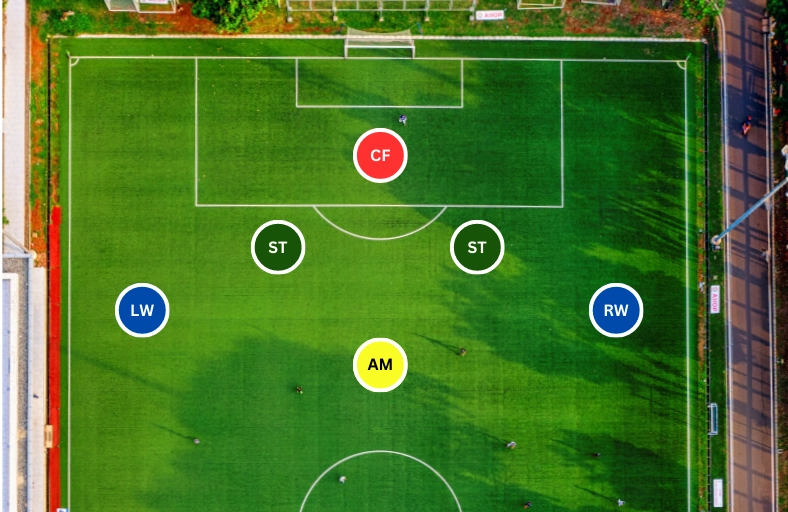

Many football fans wonder whether a player should operate as a striker or winger, especially because several well-known professional players can perform effectively in both roles. While we have already explained all football positions in a previous article, this post focuses specifically on the difference between strikers and wingers and how each role contributes to a team’s attacking structure.
The key difference between strikers and wingers is their positioning on the pitch and their primary role. Strikers operate in central areas, with the main objective of scoring goals. Wingers use the flanks to provide width to the team’s attack and to create scoring opportunities for teammates.
Another important factor that distinguishes strikers from wingers is their physical profile. Strikers are usually taller and more muscular. As a result, they can hold off defenders, protect the ball, and compete in aerial duels inside the penalty area. Wingers, by contrast, are typically more agile, with superior acceleration and dribbling ability. These attributes help them beat defenders using speed and skill, creating space for themselves and others.
Keep reading for more detail on each role.
What is a striker?
Strikers are players whose primary responsibility is to score goals. They are also known as forwards and usually play closest to the opposition’s goal. In most teams, strikers are the main reference point in attack and are expected to convert chances under pressure.
Beyond finishing, strikers play an important role in linking the attack. Holding up the ball and bringing teammates into play allows midfielders and wingers to join attacks more effectively. For this reason, strikers need sufficient physical strength to cope with tight marking and the tactical awareness to time their movements into dangerous areas.
Defensive contribution is also an important part of the modern striker’s role. Strikers are often the first line of defence, pressing opposition defenders to disrupt build-up play and force mistakes. This demands stamina, work rate, and the ability to read passing lanes rather than simply chasing the ball.
There are several recognised types of strikers in football. A target man relies on strength and aerial ability to hold up play and win headers. A poacher specialises in movement and finishing inside the box. A false nine drops deeper into midfield, drawing defenders out of position and creating space for runners. A complete forward combines physical presence, technical ability, and tactical intelligence, contributing across multiple phases of play.
What is a winger?
Wingers, sometimes described as wide midfielders or wide forwards, operate on the flanks of the pitch. Their role is to provide width by stretching the opposition’s defensive line and creating space across the pitch.
Speed is one of the most important attributes for a winger. Wingers are often among the fastest players in the team, using their pace to beat defenders and exploit space behind the opposition’s back line. Dribbling ability is equally important, allowing them to isolate defenders in one-v-one situations, cut inside, or combine with overlapping full-backs.
Crossing is another essential skill. Delivering accurate balls into the box depends on timing, technique, and awareness of teammates’ movements. When done well, crossing significantly increases a team’s attacking threat. Poor delivery, however, often leads to lost possession and wasted attacking situations.
Defensive responsibility is also expected from wingers. When possession is lost, they are required to track back and support their full-backs, helping to prevent counter-attacks. This demands high stamina, discipline, and strong positional awareness over the course of a match.
Tactical differences between roles
From a tactical perspective, strikers and wingers influence the game in different ways. Strikers often occupy central defenders, creating space for midfield runners and wide players. Their movement inside the box dictates defensive positioning and shapes how opponents defend crosses and through balls.
Wingers, on the other hand, stretch the pitch horizontally. By staying wide or attacking half-spaces, they force defences to spread out, creating gaps between defenders. This can open central channels for strikers and attacking midfielders to exploit.
Understanding these tactical differences helps coaches decide how to structure attacks and helps players understand why positioning is just as important as technical ability.
Formations that combine both positions
The roles of strikers and wingers have evolved alongside tactical systems. Modern formations such as 4-3-3 and 4-2-3-1 highlight how these positions interact.
In a 4-3-3 formation, the attack is led by one central striker supported by two advanced wingers. The striker occupies central defenders and focuses on finishing, while the wingers stretch the pitch, deliver crosses, or cut inside to attack goal. This formation encourages attacking football but can leave space in wide defensive areas if not managed correctly.
The 4-2-3-1 formation offers more structure. A lone striker is supported by three attacking midfielders, including two wide players who often drift inside. In this system, the striker must hold up the ball effectively, while wingers balance creativity with defensive discipline.
Striker or winger: which position suits you?
Choosing between striker and winger depends on several factors, including physical attributes, technical strengths, and tactical understanding. Players who enjoy finishing chances, playing with their back to goal, and operating in crowded areas may be better suited to the striker role. Those who prefer space, speed, and one-v-one situations often thrive as wingers.
At amateur level, versatility is valuable. Understanding both roles can make players more adaptable and help teams adjust during matches.
Frequently Asked Questions
Can a player switch between striker and winger?
Yes. Many players move between these roles depending on team needs, opposition, or tactical setup. However, each position requires different movement patterns and responsibilities.
Do wingers need to score goals?
While creating chances is their primary role, modern wingers are increasingly expected to contribute goals, especially when playing as inverted wingers.
Is striker the hardest attacking position?
Striker can be demanding because chances are often limited and finishing under pressure is crucial. The role also carries high expectations for goal output.
In summary, while both strikers and wingers play attacking roles, their responsibilities are clearly different. Strikers operate centrally and focus on scoring goals, while wingers work from wide areas to create width and supply chances. Understanding these differences allows players to develop their strengths and enables coaches to design more effective attacking strategies.
Related Posts
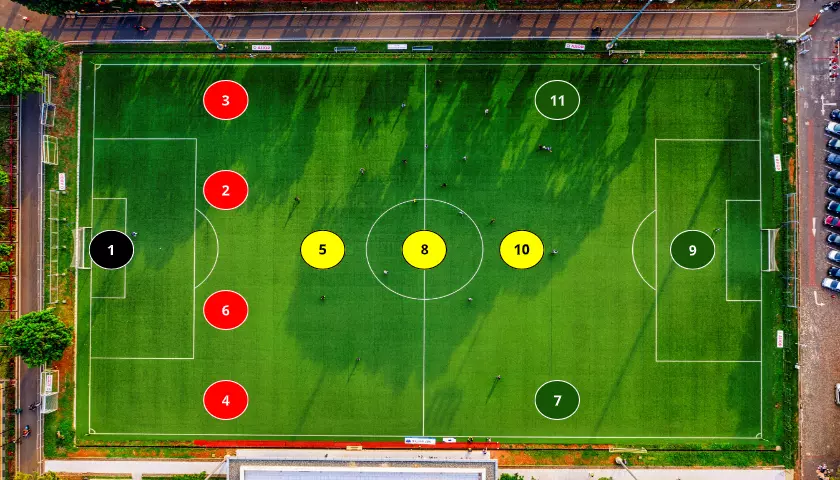
Football positions and numbers explained
This post describes the most common football positions and the jersey numbers usually associated with them.
5 attributes every football winger must have
The popularity of football wingers varies with the predominant tactics of the time. This post discusses the role and its key characteristics.
5 attributes every fullback must have
Today''s fullbacks are a hybrid between defenders and wingers. In this post, we discuss the attributes a fullback should have.