Gate Progression Football Drill: 2 Gates to Score
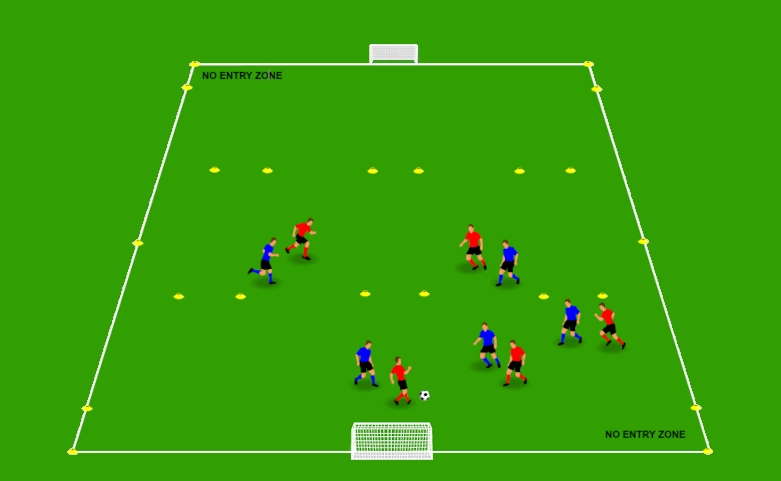

Gate progression football drill for adult amateurs: progress through the build-out gates, then the attacking gates, and you can’t go back a zone once you’ve moved forward. It stays competitive and self-refereed because every mistake becomes a simple restart from the Defensive zone.
Setup
Play 5v5 on a small-sided pitch with one mini goal at each end. Use cones to mark the pitch if you’re on an open field, or use existing pitch lines if you have them.
Divide the pitch into three zones: Defensive, Middle, and Attacking. On the line between Defensive → Middle, set up three small gates (left, centre, right) and call them the build-out gates. On the line between Middle → Attacking, set up three small gates the same way and call them the attacking gates.
Add a No Entry Zone in front of each goal (as shown in the diagram). Agree as a group where that zone starts so everyone self-referees it consistently.
Each team attacks the goal in front of them and defends the goal behind them. The ball starts with one team in their Defensive zone.
Equipment Needed
- 2 mini-goals
- 20 cones (12 for the 6 gates, 8 for the outside perimeter)
- 1 ball
- 10 training vests
Rules & Instructions
This is a directional game built around clean progression and quick transitions, with simple constraints that friends can run without a coach.
- Start Play:
- One team starts in their Defensive zone with the ball.
- Play to 5–10 goals (agree the target before you start).
- Attackers:
- To score, the ball must be moved from Defensive → Middle through any build-out gate, then from Middle → Attacking through any attacking gate.
- Once the ball has entered the Middle zone, the team in possession cannot play it back into the Defensive zone.
- Once the ball has entered the Attacking zone, the team in possession cannot play it back into the Middle or Defensive zone.
- No player can enter either No Entry Zone while the ball is in play, and goals only count if the shot is taken from outside the No Entry Zone.
- Defenders:
- Defenders can press and tackle in any zone outside the No Entry Zones.
- Defenders cannot enter either No Entry Zone while the ball is in play.
- No sliding tackles are allowed.
- When the ball is won, the defending team immediately attacks the opposite direction.
- After winning the ball, the new attacking team must complete both progressions before they can score.
- Restart:
- All restarts are taken by the correct team with the ball in play from their Defensive zone.
- After a goal or when the ball goes out of play, the correct team restarts.
- If the ball enters the next zone outside the target gates or is played back into a previous zone, the opposition restarts.
- If a player enters a No Entry Zone or makes a sliding tackle, the opposition restarts.
- If the ball comes to rest inside a No Entry Zone without a goal, the defending team restarts.
Coaching Tips
- Encourage players to scan early and spot the free gate before they take their first touch.
- Use the side gates to break pressure when the middle is crowded.
- Support underneath the ball to keep a safe option available within the same zone.
- Play forward with disguise: shape to one gate, then slip it through another.
- Defenders should stay on their feet and press in pairs to protect the central gate first.
- Remind finishers to set the ball outside the No Entry Zone before shooting.
Why It Works for Adult Amateur Teams
Adult amateur games often stall because teams recycle too quickly under pressure and miss the moment to play forward. This game keeps progression honest: you can recycle inside the zone when it’s the safest option, but you can’t drop the ball back into a previous zone once you’ve progressed.
The No Entry Zones stop cheap goal-line camping and prevent a defender from acting as a “goalkeeper” on the line. That keeps finishing realistic, so goals come from movement, support, and clean shots from outside the zone rather than bodies stacked in the net.
- Players improve recognition of forward options and switch to the free gate quickly.
- Teams build better support angles inside each zone to avoid forced back-passes.
- Attacks become more purposeful, with clear sequencing from build-up to finish.
- Defending becomes more coordinated because the gates create obvious pressing cues.
- Finishing improves because shots come from outside the No Entry Zone under pressure.
Get Involved
Want more drills like this? Follow us on social media or subscribe to our newsletter for weekly training ideas built specifically for adult amateur teams. Share your session adaptations with us on Facebook or Instagram.
Related Posts
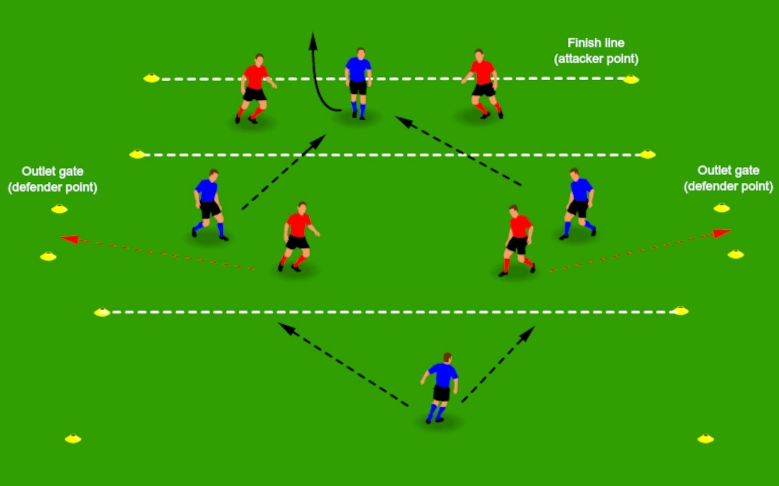
Progressive Passing Diamond: Breaking Lines
A competitive 4v4 diamond game to split a locked block, then drive over the finish line. Defenders score by winning it and playing out through outlet gates.
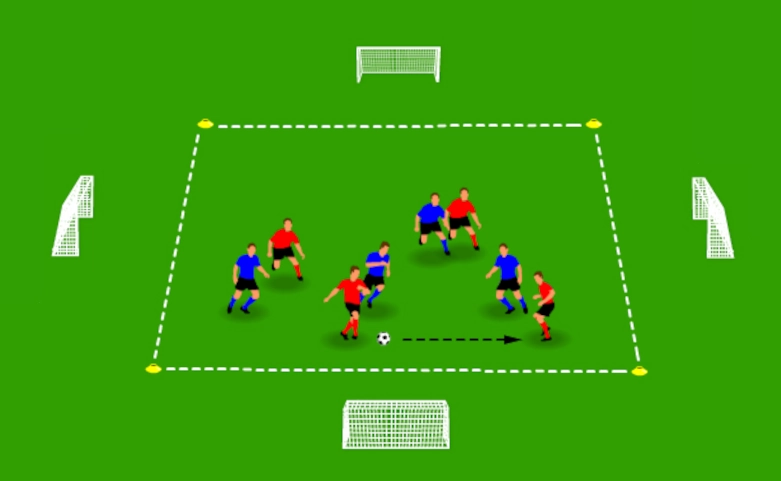
Rondo Pressing Drill - Win the Ball Back Fast
High-tempo rondo game that trains counter-pressing, clean regains, and fast transitions using a 12×12m grid, 4 mini-goals, 2 touches, and a 6-pass trigger.
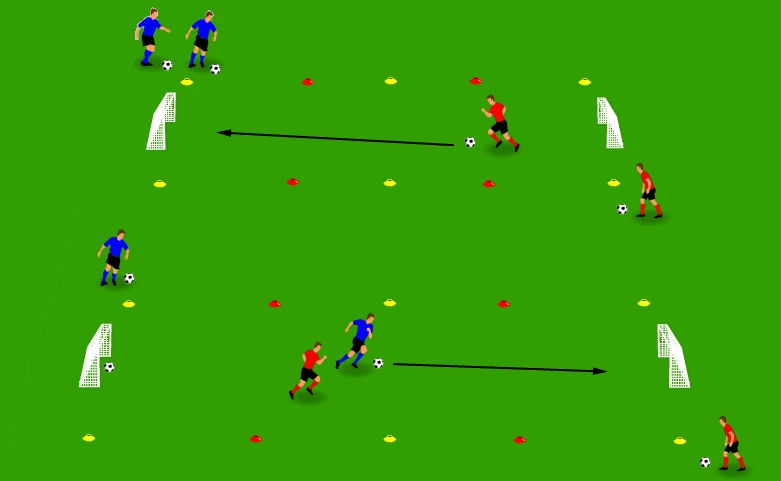
Recovery Defending Drill - Half-Pitch 1v1 Pressure Duel
Use this recovery defending drill to train players to delay and press attackers after losing position. Perfect for simulating real 1v1 duels on the wing.